
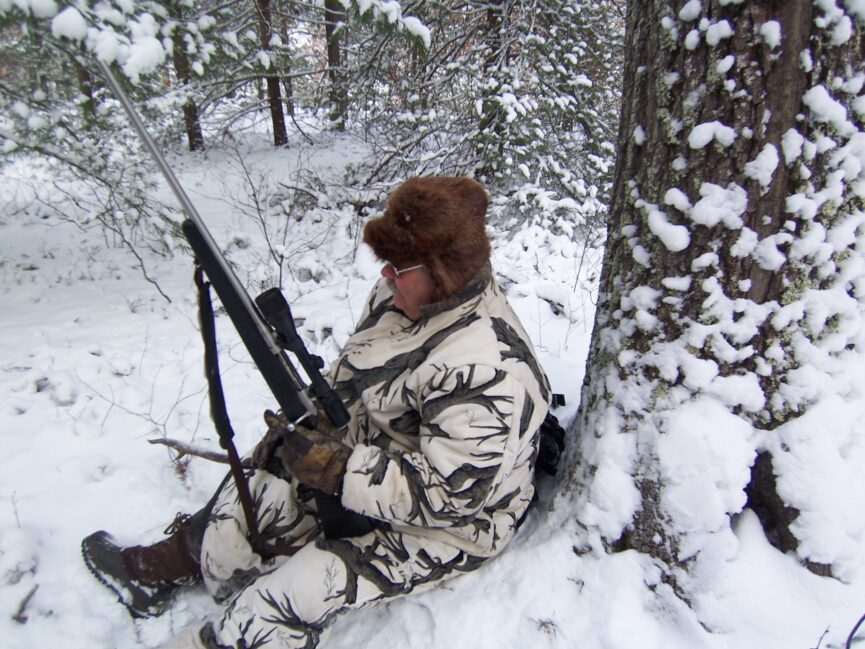
Michigan has had some rather mild winters in recent years, but this year has been an eye-opener. At least in my Thumb area, it has been an up and down matter, sometimes featuring freezing rain and soon followed by snow, often lots of it, usually accompanied by strong winds creating drifting and whiteouts. In fact, I’m amazed by the strong, sometimes erratic, winds which have become unbelievingly common this winter. Yep, folks, snow coming down backed by 30-60 mph winds can get a bit interesting!
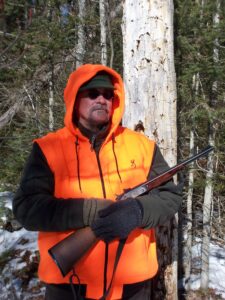
hoodies & other head-covers offer unique thermal protection not afforded by a standard hat
I will never forget the Thumb in experiencing a balmy week not all that long ago with up to 60-degree temperatures and some heavy-duty rain which melted most of the snow. This was followed a week later by drastically falling temperatures and a lot more snow featuring subzero weather. Our home is surrounded by trees and hearing some create a popping noise, almost like a gunshot, has been happening quite frequently lately. This is made by subzero temperatures causing the sap to freeze and create a crack. I’ve seen this happen before and the trees usually heal up, but there will be a noticeable scar left in the bark, some which can be lengthy.
The ongoing “deep freeze” has avid ice anglers eager to get into the game, and plenty are already at it, especially on Saginaw Bay. A DNR news release on January 21st cautioned ice anglers that Saginaw Bay is still in the process of forming adequate ice, with open water remaining in certain areas. I recently contacted a Fisheries Biologist at the Bay City DNR Office and was informed that Saginaw Bay is experiencing some crazy conditions with ice being 10 to 15 inches thick in some areas and open water remaining in others. The strong winds during the freezing process have caused the ice to also be extremely rough, which can hinder travel. Parts of the Saginaw River also feature some ongoing ice fishing activity, and inland lakes can offer the most dependable ice. But caution and carefully checking matters out beforehand is highly recommended.
Not that long ago when the “January thaw” took place, my large farm pond featured open water around most of the shoreline, with the ice in the middle having a slushy nature. Despite the ongoing “big chill”, I’m not about to set foot on it until I know the ice has had time to fully knit and thicken. The pond is bordered by heavy cover along three sides, which I frequently rabbit hunt with my dogs. However, I won’t try hunting near it until I’m sure the ice is thick enough, because rabbits can easily run across ice which might not support a dog’s weight.
River ice is the testiest due to currents continually flowing beneath it creating different thicknesses, with straight stretches being safer than near bends in the river where currents tend to pick up.
My only serious dunking through the ice occurred in the Cass River during the late 1960’s. Fresh snow had just fallen, and I decided to go fox hunting which entails spot-and-stalk or tracking techniques and is a challenging pastime I still enjoy. While driving backroads and glassing, I spotted a red fox a quarter mile away crossing a field I had permission to hunt, and it was headed for brushy cover alongside the river.
I waited until the fox disappeared into the cover before striking out from my parked car, and I uncased my 20 ga shotgun which I stoked with number 3 buckshot, which is a handy combo for fox hunting in heavy cover. Being in a hurry, I left my snowshoes with my cased rifle behind in the locked car near the roadside and headed out at a jog as best I could in almost knee-deep snow to reach where I had last seen the fox and then “lock-on” to its tracks.
The tracks led straight down the steep riverbank and went across the snow-covered river, and I made the fateful assumption that with the ongoing frigid temperature the ice was thick enough to support my weight. Halfway across and without any warning, I dropped straight down into chest-deep, very cold, bone-chilling water. Fortunately, the current wasn’t strong enough to drag me under the ice, and having my feet touching the bottom certainly helped in this regard. I turned around to head back and placed my shotgun on top of the ice, but I could not gain any purchase to haul myself out and being in waterlogged clothing didn’t help much. I was able to draw my hunting knife out from its sheath but had to remove my wet right glove to do so, which I lost during the process.
By stabbing into the ice with the knife, I gained enough purchase to begin hauling myself out, but the ice would break away under my weight and kept doing so, until I got in water shallow enough to clamber out and crawl to shore. It was then going double-time retracing my steps back to the car with my shotgun held in my left wet-gloved hand and my frozen bare right hand tucked under my left, wet armpit, and hypothermia was already quickly setting in. When I finally got to my old ’59 Rambler, after some difficulty removing a frozen-to-my-shotgun glove, I used my left hand to get the car keys out and unlock the door and then start the engine with some concentrated effort due to uncontrollable shaking.
While the car heater began to kick in, I grabbed up a wool blanket from the backseat which I kept there in case of an emergency, and wrapped up in it, wet clothes and all because my fingers couldn’t work to remove anything. A heated-up car eventually pulled me back and my teeth finally quit sounding like castanets, but I ended up with a touch of frostbite on a couple fingers on my right hand. Yep, folks, you never forget a close call like that!
A case in point is if I had taken the time to put my snowshoes on (which transfer the bodyweight over a bigger area), I may have been able to make the frozen-river crossing, but then again, they would have had an adverse effect had I broken through. The hinged effect of trying to kick in the water with snowshoes will pull you down, and I have learned to always wear mine in a manner which allows me to quickly shuck them if need be. My experience also points out that ice anglers should always have a pair of easily accessible and inexpensive ice picks for pulling themselves out of a fix. I also carry a 50 ft length paracord wrapped around a piece of wood (which adds weight for casting some distance) to throw to someone who has fallen through the ice. It is not wise to walk right out to assist them.
Yep, folks, I’m personally biding my time to assure the ice becomes thicker and safe enough over a wider area. With the present ongoing “big chill”, it will happen soon enough.

than 40 years and has had his weekly radio show, “Tom Lounsbury
Outdoors” for more than 20 years. Tom grew up on a farm in
Michigan’s Thumb, and it is where his first outdoor adventures began
as a kid accompanying visiting pheasant hunters into the field during
the “pheasant hunting heyday” of the 1950’s and 1960’s. It is a passion
he still has to this day and being the 4 th generation to own the family
farm, he has put most of it into conservation programs with a focus on
wild pheasants, which in turn helps all wildlife.
Being an outdoor communicator, Tom appreciates all the outdoor
adventures he experiences in different places, and especially the
people he meets in which to share them.
- The kayak – today’s king of Michigan’s bountiful waterways - March 30, 2026
- Connecticut Valley Arms – celebrating 55 years and going strong with continual new products and innovations - March 18, 2026
- Silence Can Be Golden - March 15, 2026