
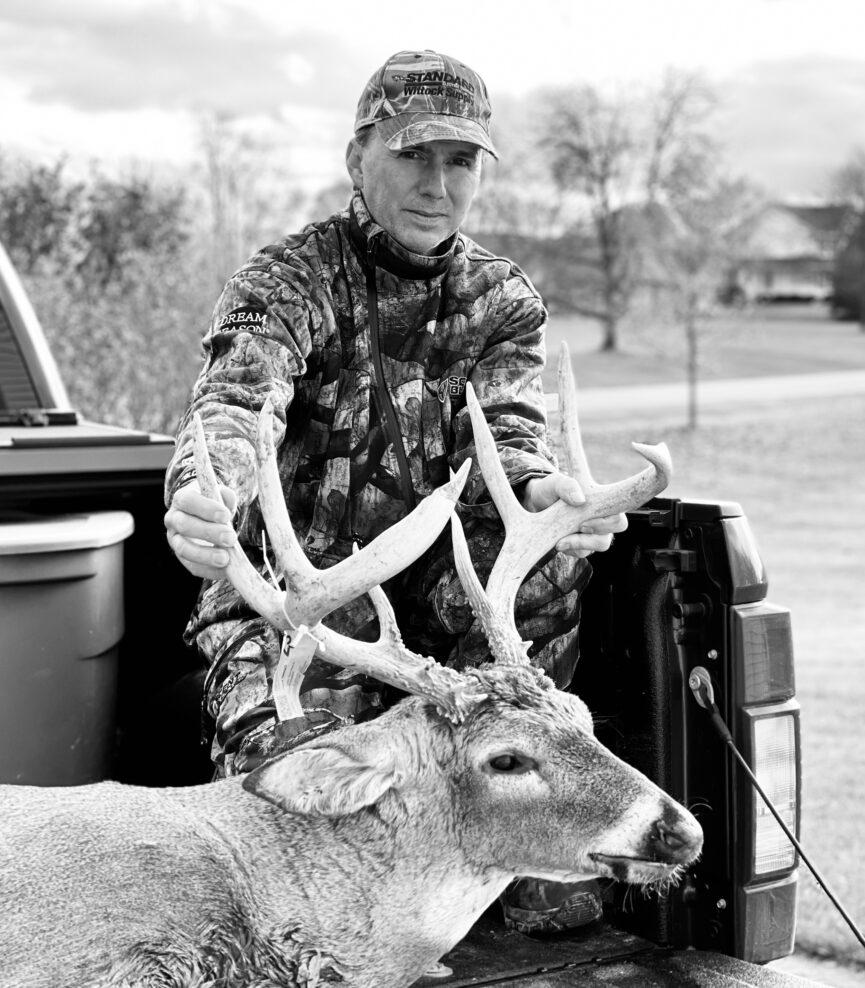
It’s all-over social media pages, it’s flooding YouTube and it sounds like it’s coming whether you like it or not.
When I began hunting as a child, I remember the days when you had to put into a draw or lottery system just to obtain one antlerless deer permit. For many years, that was necessary to allow the Michigan deer herd to grow. Back then, a hunter was allowed to purchase an archery deer tag which was good for an antlered deer or an antlerless deer, then that same hunter was allowed to purchase a firearm deer tag that was only good for an antlered deer only. I can’t remember when but eventually the Michigan DNR changed those regulations and began selling the Combination license which has ever since allowed a hunter to purchase a deer license with two kill tags, allowing the hunter to harvest two antlered deer in any combination they chose. Such as one with a bow and one with a gun or two with a bow or two with a gun. It was up to the hunter to decide how he or she wanted to utilize those two kill tags. Now those combination licenses had different regulations attached to them from year to year and depending on what part of the state you were hunting in, you may have had antler point restrictions and or even the possibility of using the combination tag to harvest one or even two antlerless deer. The DNR has tried many different tactics over the past couple of decades to get hunters to harvest more deer, specifically, more antlerless deer. Typically, that would mean harvesting a doe or two from the herd to help reduce the overall population. Despite their efforts, the MI DNR has been unsuccessful in getting many Michigan deer hunters to cooperate with them in their efforts to reduce the doe population. Many areas in the lower peninsula have quite literally become overrun by white tails and some of those areas report Buck to Doe ratios that are equal or greater to 10:1. That’s ten does to every buck. Many hunters have been calling for change and are stating that it’s time to balance the herd. Which means getting us closer to a 1:1 Buck to Doe ratio. A big change that has recently been strongly advocated for is that Michigan drops the current two buck tag system and goes to a single buck tag. The thought is that too many hunters will shoot a “Mulligan Buck” and then wait the remainder of the season in hopes to fill the second tag with a buck of greater antlered value. Another argument being made is that many hunters will not shoot a doe because they are waiting on that second buck. On April 8, 2026, at the NRC meeting held on L.C.C.’s west campus in Lansing, Michigan, many hunters and sportsmen showed their support of Michigan becoming a one buck state. Many of those men and women agreed that they want to see Michigan’s deer herd more balanced and that the one buck rule should increase the average age of Michigan’s typical adult whitetail. Others stated that the rut activity would be improved with a balanced herd and would create competition amongst bucks and force them to get up and move around and compete for a doe to breed rather than laying around waiting for the next hot doe to appear before them. I can testify to having seen this scenario happen before my own eyes. For the past two or maybe three years, my hunting partner Steve and I have watched a big old buck across the road just hanging out in one field so full of doe that he would never have possibly been able to breed them all.
In addition to the one buck tag rule, there were several other big changes suggested that will have a significant impact on what the next deer season might look like. Suggestions like eliminating the limited firearm zone in lower Michigan and even moving the start of the gun season opener to the Saturday before Thanksgiving were made as well. Some folks advocated for the return of a true muzzleloader season, while others commented that a later firearm season of any kind should be limited to only a three-day window.
Shorter seasons and less time to hunt? You might be asking yourself how can a shorter season and less time to hunt possibly increase harvest numbers? The argument that I have heard is simple in theory. That being, the DNR hopes to create a sense of urgency in hunters to get out there and get tags filled before the season is over. The hope is to promote more hunters to shoot a doe for the additional meat instead of a second buck. The thought goes back to the hunter sitting on their perch with that second buck tag waiting and waiting but never pulling the trigger. I have witnessed my friends do that many times.
The consensus, well, simply put, as hunters need to do a better job at herd management and start thinning the over abundant doe population. I for one always do my part. I try to shoot two or more doe every year. Last year, between my son, my hunting partner and myself, we harvested a total of 11 deer, four bucks and seven does. It was a lot of extra work dragging those does out of the woods, but they went to families that I knew that all wanted or needed the meat, and I was happy to help provide for that need. Unfortunately, not all hunters participate in harvesting antlerless deer. Some of that is personal preference, some of it is just engrained in their mind because Dad or Grandpa told them years ago not to shoot a doe. Whatever the case, it’s not for me or anyone else to tell another hunter what he or she must do. However, as a responsible hunter, I feel it’s my responsibility to do my part in effectively managing the deer population.
Author depicting example of future Michigan whitetail deer hunting expectations..?
No matter what your opinion, your feelings or your frustrations, I hope you will consider joining the effort this fall in reducing our doe numbers and balancing the herd. I think you will find that whatever change is coming will be what is best for the resource overall. And in the end, if we do what’s right for the resource, it will inevitably be what is best for the hunter as well.
As always, good luck out there, Happy Hunting, and God Bless.

son how to shoot and have watched him successfully harvest three deer to date. I enjoy making memories with him in the woods and hope to see him take some nice deer in years to come. My loving wife and partner in life is my biggest fan and supports me in all of my endeavors. We love to go camping, hiking, kayaking and exploring together. I’ve been to Canada nine times and counting on remote fly-in fishing trips and love going after those tasty Walleye and giant Northern pike. Most recently to date, I have become a Michigan DNR certified Hunter and Bow Hunter Safety instructor and
have started writing for the Wild Game Dynasty Blog. I enjoy giving back, by teaching youth some of what I have learned in my years of experience in the woods, as well as sharing my stories with readers.
- Big change is coming to Michigan Deer season - April 25, 2026
- My First Year In The Tree Saddle - February 22, 2026
- The Mobile Hunting Movement - November 26, 2025