
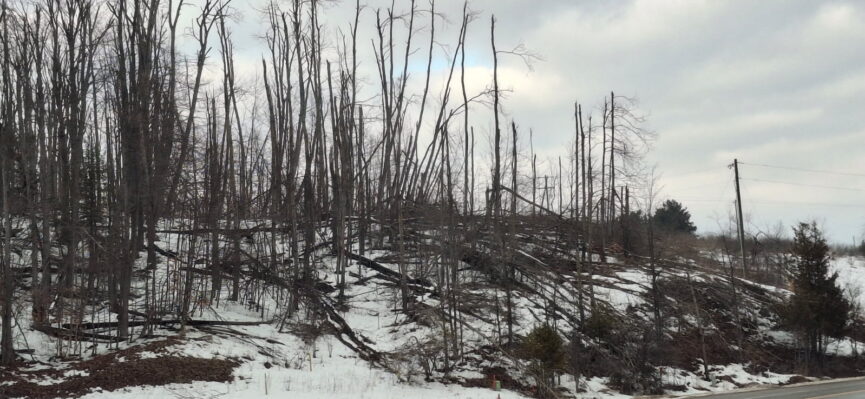
The historic ice storm of ‘25 is behind us, but what are the lingering effects one year later?
The effects are still a visible spectacle in many areas. What seemed less evident during the flourishing summer months when the deciduous trees were full with their yearly display of leaves would prove to be a ruse. As these leaves dropped in their usual fashion, having served as a masquerade of sorts, especially once winter was in full swing, the ugly truth was exposed as the inner ruins of the forests stood before us.
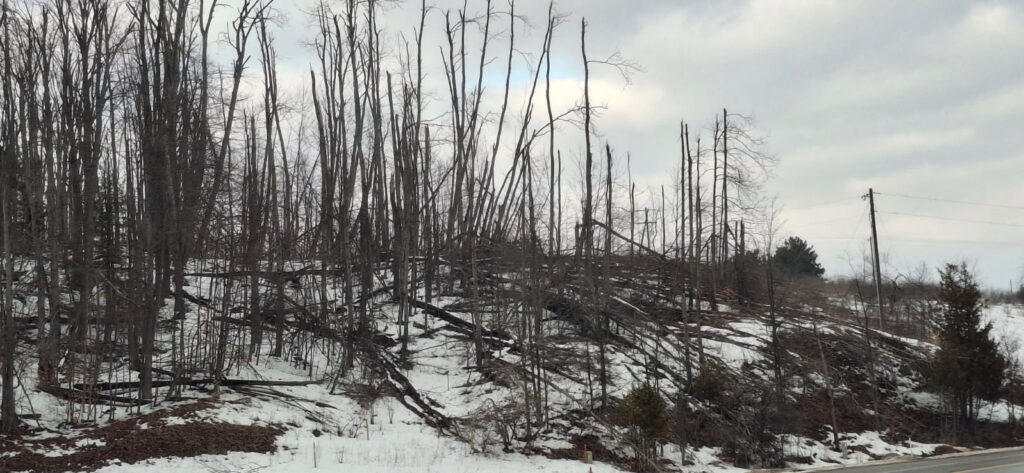
Montmorency County ice storm devastation
Once spring arrives, we’ll have a much better grasp of the effects this storm left on a larger scale, beyond the aesthetics of affected trees.
Last summer, at least for us, wild blueberry picking was the worst we’d ever seen, finding only a few isolated berries here and there. Could this be a result of forest changes from the many downed trees? We’re sure hoping for better pickins this year.
As far as fishing goes, it was a challenge navigating the streams, significantly limiting access and options for local fishermen.
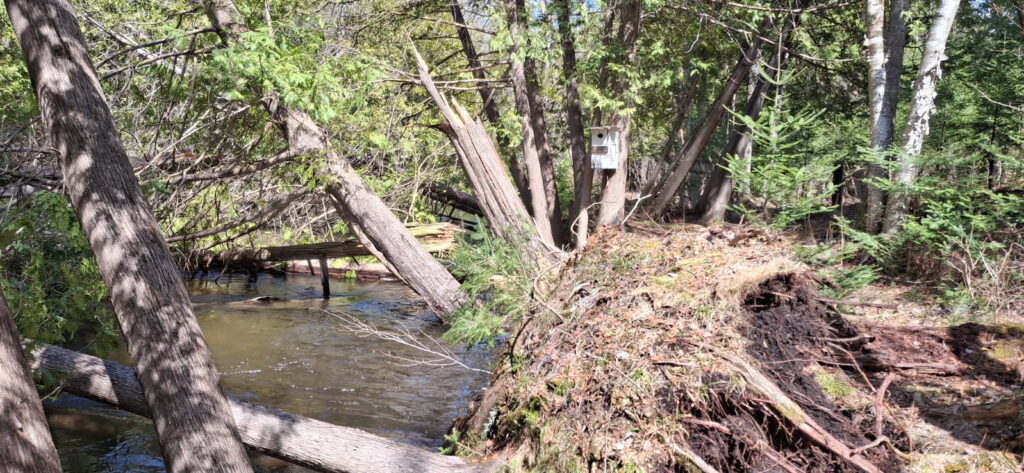
The after-effects of an ice storm on local fishing, critter habitats
For those who would brave the elements, at least the structural obstacles above and below the water, there were surely trophies to be obtained, and quite likely a feast of fish! Our nephew, Troy, wouldn’t let these barriers stop him, but he’s likely one of the few that would go to such extremes for a meal of tasty Brook Trout.
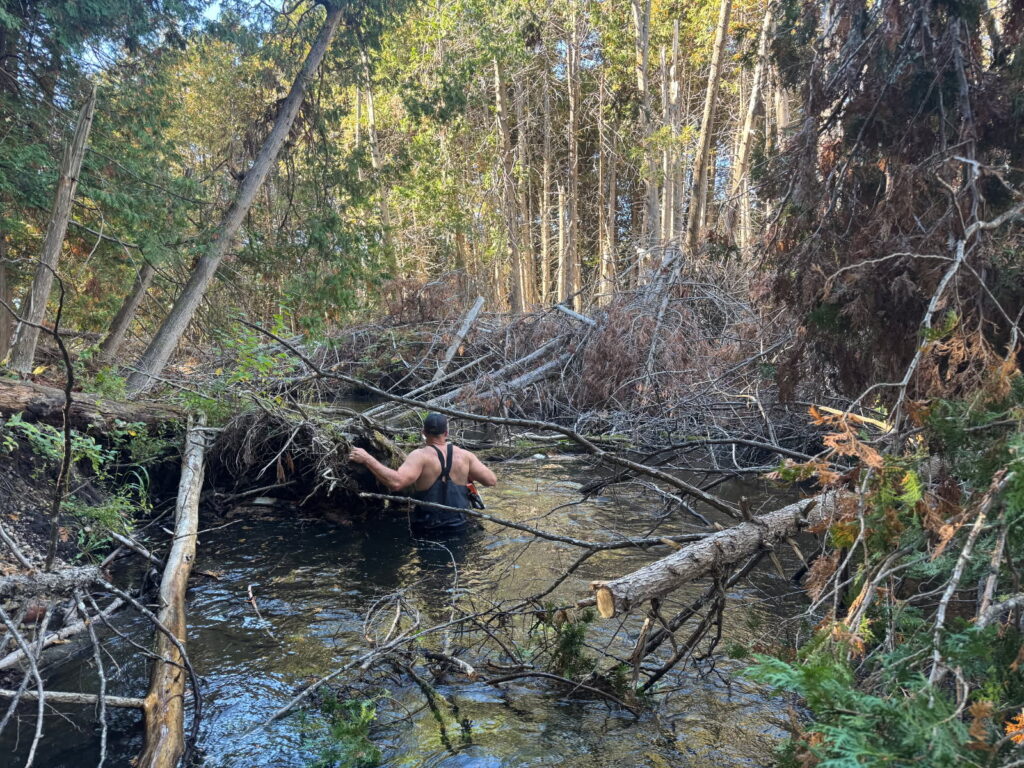
Efforts to clear debris on a NE Michigan river
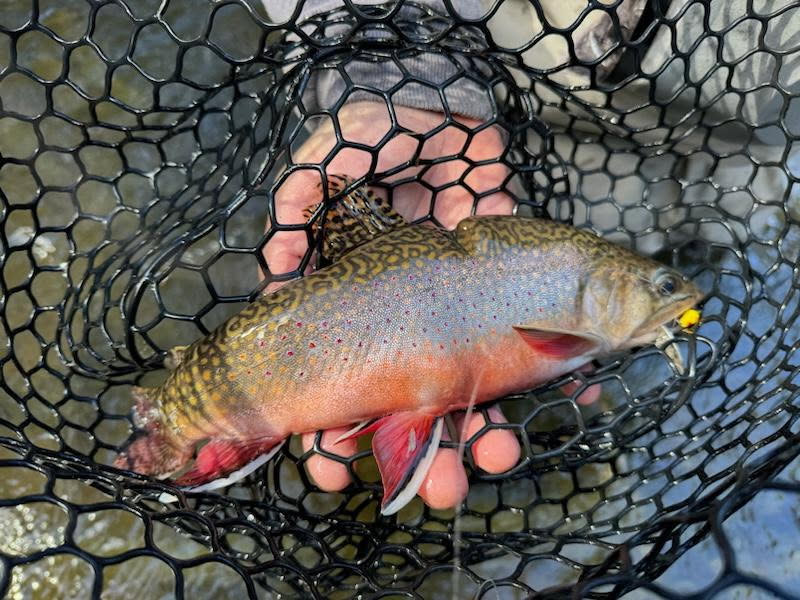
A Well-Earned Brookie!
Fall hunting season, whether for black bear or elk, presented its own challenges. With so many 2-tracks blocked off by downed trees, elk hunters and their guides were unable to make their way to typical hot spots. As elk hunting is more of a road rally than actual hunt, at least according to those I’ve talked to, this made the pursuit that much more difficult. Red oak area hunting guide, John Jones, was very frustrated by the lack of black bear sightings, likely a direct result of these forest changes, as they were unable to reach the more remote sites where greater success is achieved.
I talked with a local family who are 5th generation maple syrup farmers. Many of their maple trees were greatly effected, as these tall trees suffered the damage of broken branches, often even being literally topped off during the Ice Storm of ‘25. Though some of these trees seem to be recovering, they’re planning to give these trees a rest from being tapped this year. They’re fortunate to have other areas in the state where they can continue tapping trees for their large scale operation. Overall, though, 100,000 to 200,000 sap producing trees were damaged potentially ruining 25% or more of the annual crop. With 3 million acres of forest devastated, sap and subsequent maple syrup production will be hindered for years to come. This is not only the result of lost forest canopy, necessary for sap production, and tree damage, but also damage or destruction of many sugarbushes, including their extensive system of sap lines.
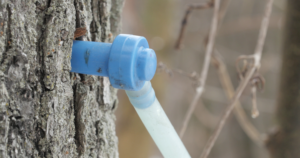
Maple sap spile, part of the tubing system.
This industry initially suffered an estimated $3.5 million loss in bulk sales, and with all the cleanup costs and lack of aid programs available, the negative impact becomes long-term. Restoring damaged sugarbushes could take 20+ years. But it will take much longer than that to replenish the sugar maples that provide this exquisite, delectable commodity.
As a syrup snob, born and raised on this stuff, a direct recipient of the real thing courtesy of my father, Roy Harrison, and his faithful sidekick, my brother, Craig, this is cause for concern.

Classic Grandpa Roy in his sap shack, Molson in hand, of course! Roy was a 1948 Atlanta HS alumni.
I was encouraged to learn that these multiple obstacles, however, do not negatively impact the flavor and may even increase sugar content of the sap that is collected.

Maple Syrup… Fresh from the tap!
In some areas, these temperature fluctuations related to prolonged cold, then thaw, may actually enhance the flow of sap.
As I reflect on that fateful weekend almost a year ago now, I’ll admit that a few lessons were learned… Make sure your gas tanks are filled and keep a little cash on hand. I’ll also admit that the storm last week almost brought on a little PTSD when in the middle of the night, amidst high winds and the sound of massive icing taking place, the power suddenly went out and it became ominously dark. De’ja’ vu, right? This was as my husband was reaching to turn out the bathroom light and momentarily thought he had a super power! It got awfully quiet, the darkness accentuated with the yard light temporarily extinguished. We waited for the generator to kick in during that stillness and silently prayed that this would be short lived, which thankfully it was.
My hope is that nature’s amazing capacity to heal and restore does just that at a rate that is much greater than anticipated. In the meantime, I appreciate our local maple syrup farmers and all they do, and plan to keep my pantry stashed!

- LESSONS FROM SASQUATCH, AKA Ross Chambers (Perhaps ROSSQUATCH?) - July 15, 2026
- Opening Day 2026 - July 14, 2026
- Failure to Launch - July 14, 2026